How to Read a Cricket Scorecard: Understand Runs, Wickets, Overs, Extras, Batting Figures and Bowling Statistics
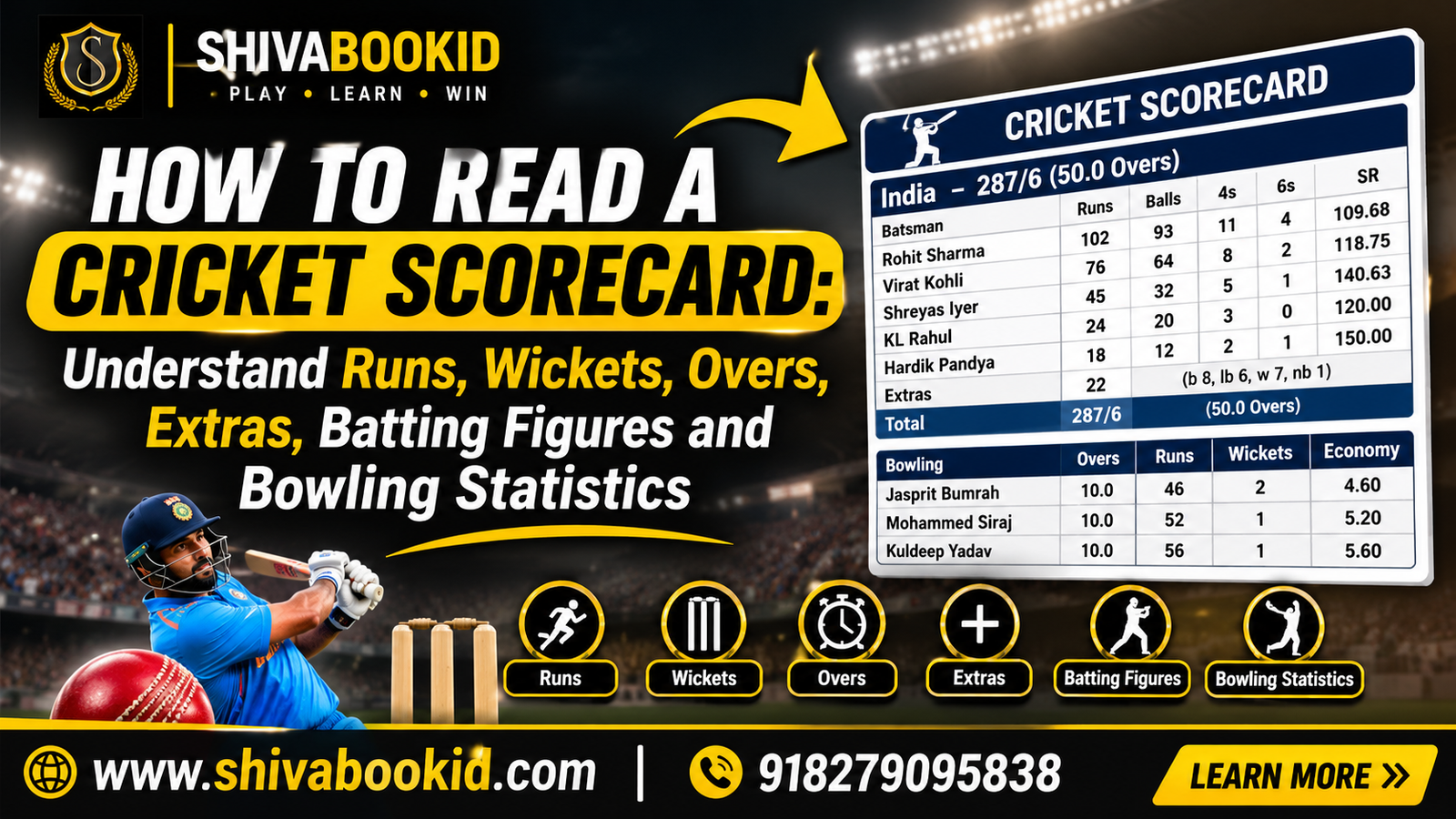
Open any live match page and you see a wall of numbers. Letters like c, b, st and lbw. Figures like 34 (22) and 4-0-31-2. It feels like a tax form.
It is not hard, though. Once you know what each column means, a scorecard tells you the whole story of a match in about thirty seconds. This guide explains how to read a cricket scorecard in 2026, with one worked example you can follow line by line.
How do you read a cricket scorecard? Start with the team total, written as runs/wickets (for example 168/6). Then read the batting table for runs, balls faced, fours, sixes and strike rate. Check extras and fall of wickets. Finish with the bowling table for overs, maidens, runs, wickets and economy.
What Is a Cricket Scorecard?
A cricket scorecard is the official record of an innings. It lists every batter, how each one got out, who bowled, who caught, and how many runs came from where. It also shows extras, the total and the fall of wickets.
Not sure about terms like over, wicket or extras? Read our cricket rules for beginners first. Then come back here. Everything will click faster.
A Sample Scorecard We Will Use
- R (runs): Runs the batter scored. Patel made 58.
- B (balls): Legal balls faced. Patel faced 38.
- 4s and 6s: Boundaries hit. Five fours and three sixes gave Patel 38 runs in boundaries alone. The other 20 came from running.
- SR (strike rate): Runs per 100 balls. The formula is runs divided by balls, times 100. So 58 divided by 38, times 100, gives 152.63.
Some scorecards add M (minutes at the crease). That column is common in Tests, rare in T20.
Dismissal Codes: What c, b, lbw and st Mean
One trick. If a batter is caught by the keeper, you will see "c †Gill b Das". The dagger marks the wicketkeeper. If the bowler also took the catch, you will see "c & b Das".
Reading the Total, Wickets and OversThe line "168/6 (20 overs)" has three parts. Runs: 168. Wickets lost: 6. Overs used: 20. In India and most cricket nations, runs come first. Some places, including Australia, write wickets first.
Divide runs by overs to get the run rate. For Team A that is 168 divided by 20, or 8.40 runs per over.
Overs use a dot in a special way. The number 17.4 means 17 complete overs and 4 balls. Not 17 and four-tenths. It equals 106 legal balls. After 17.5 comes 18.0.
Fall of Wickets: The Hidden Story
Most people skip this line. That is a mistake. Fall of wickets shows the score and the over when each batter fell.
Look at ours: 1-29 and 2-29. Two wickets fell on the same total, within two balls. That is a collapse. Then Verma and Patel rebuilt, adding 43 for the third wicket. Patel and Dev followed with 59 for the fourth. Partnerships like these decide T20 matches.
Formats matter here. A Test scorecard shows this line for both innings. It is also how analysts measure partnerships.
How to Read Bowling Statistics
- O (overs): Overs bowled. Each bowler delivered the full T20 quota of four.
- M (maidens): Overs with no runs off the bat. None here.
- R (runs): Runs conceded, including wides and no-balls.
- W (wickets): Dismissals credited to the bowler.
- Econ (economy): Runs divided by overs. Khan gave 31 in 4 overs, so 31 divided by 4 equals 7.75.
The bowling line is often written compactly as 4-0-31-2. That reads overs, maidens, runs, wickets. Khan: four overs, no maidens, 31 runs, two wickets.
Why Bowling Runs Do Not Match the Team Total
Add the bowlers' runs: 31, 38, 35, 30 and 29. You get 163. But the team total was 168. Where did 5 runs go?
Byes and leg byes. Those 2 plus 3 runs are not charged to any bowler. Wides and no-balls, though, are charged to the bowler. That is why 163 plus 5 equals 168.
Another point. Five wickets belong to the bowlers (2 plus 1 plus 2). The sixth, Dev, was run out. Run outs never count in a bowler's tally.
Two more stats appear in longer formats. Bowling average is runs conceded divided by wickets taken. Bowling strike rate is balls bowled divided by wickets taken. Lower is better for both.
Reading the Match Situation
Here is where the scorecard becomes useful during a live match. Team B must chase 169 to win, one more than 168. Over 20 overs, that is 169 divided by 20, so 8.45 runs per over.
That number is the required run rate. If Team B reaches 10 overs at 70/2, they need 99 more from 60 balls. The required rate has jumped to 9.90. The chase is getting tighter. Live scorecards usually show current run rate and required run rate side by side. Compare them. The gap tells you who is ahead.
Test and ODI Scorecards: What Changes
The layout stays the same. A few details differ.
- Test matches: Two innings per team. You will see "d" next to a total when a captain declared. You will also see "lead by" or "trail by" figures.
- ODIs: 50 overs per side. Powerplay phases may be listed.
- Rain-affected games: A revised target appears under the Duckworth-Lewis-Stern method. Always read the note under the total.
A Quick Five-Step Checklist
- Read the total, wickets and overs.
- Scan top scorers and strike rates.
- Check extras. A high figure shows loose bowling.
- Read fall of wickets for collapses and partnerships.
- Check bowling economy and wickets.
Do it in that order every time. In a month, you will not need the checklist.
Use Scorecard Skills on Live Matches
Live platforms update these figures ball by ball. Understanding strike rate, economy and run rate makes live markets easier to follow, since odds usually move after wickets and run-rate swings. You can see how live cricket works on our online cricket ID page, or check how an exchange ID works. For popular panels, see Matchexch9. More guides sit in our blog section.
Reminder: services mentioned here are for adults aged 18 and above. Gaming involves financial risk, and local laws differ. Play within limits. See our responsible gaming page.
Frequently Asked Questions About Cricket Scorecards
What does 168/6 mean in a cricket scorecard?
The score 168/6 means the batting team has scored 168 runs and lost 6 wickets. In India and most countries, runs are written first and wickets second. Some regions, like Australia, write it the other way as 6/168.
What does SR mean in cricket?
SR stands for strike rate. It shows how many runs a batter scores per 100 balls faced. The formula is runs divided by balls faced, multiplied by 100. A batter with 58 runs off 38 balls has a strike rate of 152.63.
What does economy rate mean for a bowler?
Economy rate is the average number of runs a bowler concedes per over. Divide runs conceded by overs bowled. A bowler who gives 31 runs in 4 overs has an economy of 7.75. Lower is better for the bowler.
What do the letters c, b, lbw and st mean next to a batter's name?
They show how the batter was dismissed. The letter c means caught, b means bowled by that bowler, lbw means leg before wicket, and st means stumped by the keeper. For example, c Rao b Khan means Rao caught the ball off Khan's bowling.
What is the difference between byes and leg byes?
Byes are runs scored when the ball passes the batter without touching the bat or body, and the keeper misses it. Leg byes are runs scored after the ball hits the batter's body but not the bat. Both are extras and are not credited to the batter.
How do you read overs like 17.4 on a scorecard?
The number before the dot is completed overs. The number after the dot is balls in the current over. So 17.4 means 17 overs and 4 balls, which is 106 legal balls. It does not mean 17 and four-tenths of an over.
Wrapping Up
A scorecard is just a story in numbers. Runs show who attacked. Extras show who lost control. Fall of wickets shows where the match turned. Bowling figures show who held on. Practise on the next match you watch, and compare the final card with what you saw.
Disclaimer: The scorecard above is a fictional example created for learning. Rules and formats can vary by tournament. 18+ only.